Rambler
4 Exercises To Understand the G Major Scale
“Going Down the Scale” is a phrase I used in my last video lesson when we looked at three spots where drop-thumbing can sound cool to play. In this lesson, we’re going to explore that idea a bit more and shed some light on what’s really going on with the G scale.
Now, fair warning — we’re tiptoeing along the edge of what some folks might call music theory. Down there in the abyss lurk things like chromatic scales, modes, octaves, half-steps, whole-steps, and even the Nashville Number System. You can see why I usually steer clear of all that and focus instead on the fun, practical side of actually playing music. Learning the banjo is challenging enough without turning it into a science project! There are entire college courses on this stuff, and in my opinion, that kind of deep theory can strip away the simple joy of just making sounds on your banjo.
I may go deeper into some music theory ideas in some of the later modules, but If you would like to learn all about the theory behind scales be sure to check out Patrick Costello’s Book here and skip to page 87
That said, the G scale is something you’ve already been playing around with from the very start — whether you knew it or not. In this lesson, I’ll walk you through a few short exercises designed to help you put your skills to work, especially that shiny new drop-thumb technique, as we literally go down the scale.
If viewing on a mobile device, it may be best to open up each exercise by clicking on the blue links for the downloadable tabs for better visibility
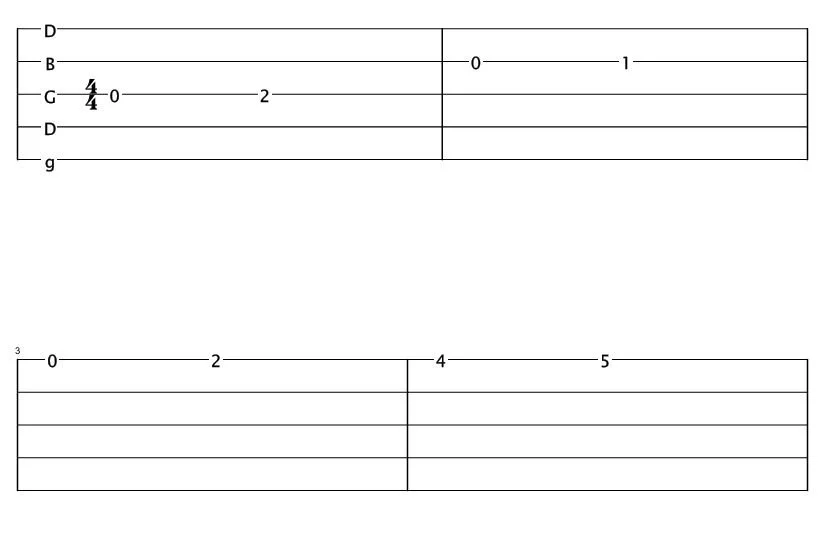
Exercise 1 - Simple Ascending Scale
Lets play a simple set of notes on our banjo in standard open G tuning. These notes are called the G major scale, listen to how they ring out as you play each note.
ANSWER
If you did it right it should have sounded something like this:
Exercise 2 - Simple Ascending and Descending
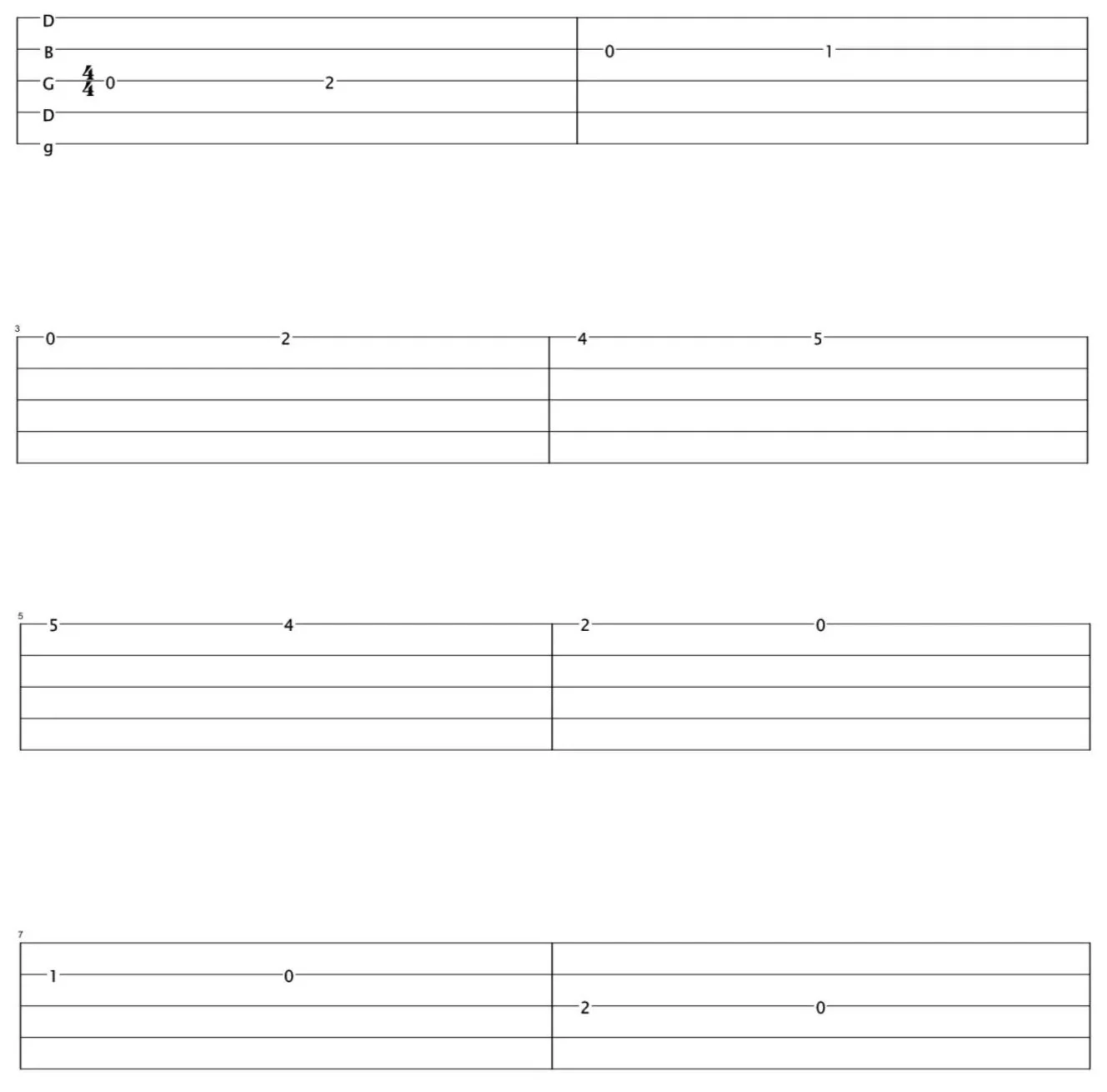
Now lets go up the scale and then come back down the G scale. Again simply pick out the notes in the tab below
ANSWER
If you did it right it should have sounded something like this:
Exercise 3 - Bum-Ditty Up and Down
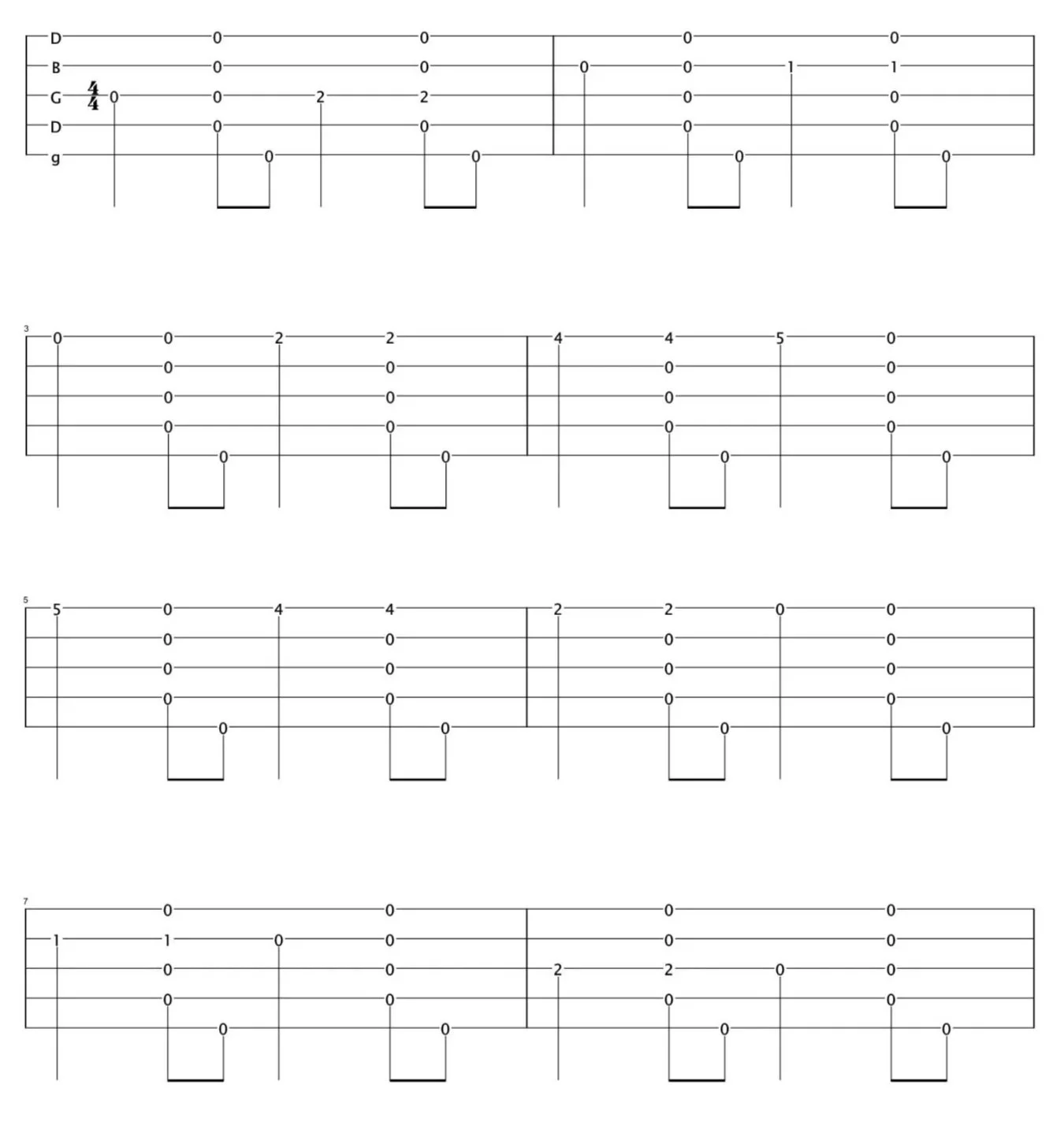
Now lets take the basic frailing strum and play the same notes in Exercise 2 but this time we are going to bum-ditty our way up and down the scale. Be sure to practice this a few times until you are comfortable doing it without much thought before moving on to exercise 4
ANSWER
If you did it right it should have sounded something like this:
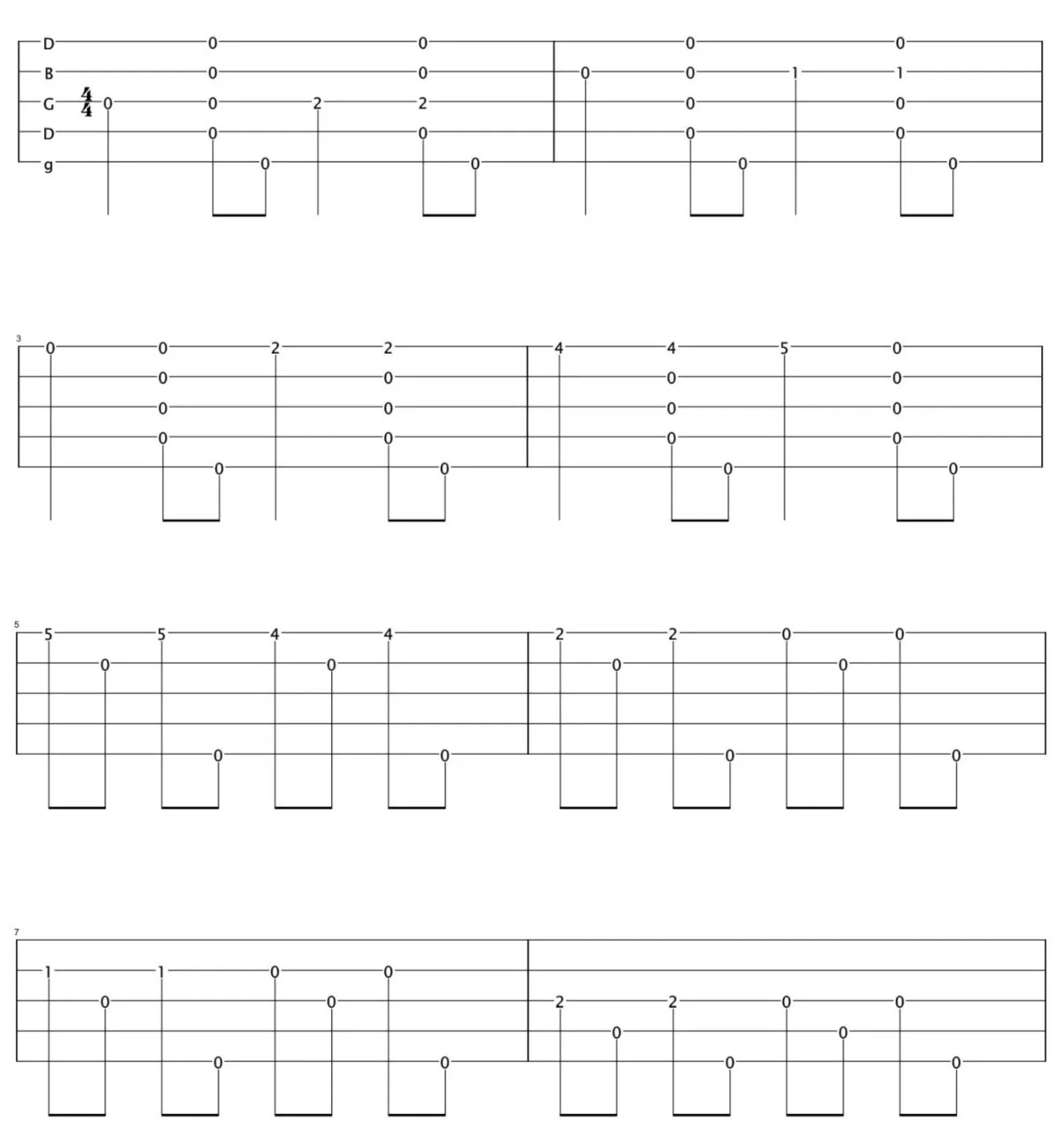
This is the final exercise in this lesson. Here we are going to go up and down the scales just like we did in exercise 3, But this time we are going to drop thumb all the way back down the scale. There are no set rules on where and when to use drop thumbing however in my opinion when playing down the scale (higher notes to lower notes) drop thumbing seems to blend well in creating beautiful melodies that almost sound like rainfall. Try it yourself.
Exercise 4 - Drop Thumb Down The Scale
ANSWER
If you did it right it should have sounded something like this: